
 中文简体
中文简体
 English


Wanghe Industrial Park, Qixian Street, Keqiao District, Shaoxing City, Zhejiang Province, China.
How Can Businesses Effectively Source High Quality Polyester Embroidery Thread That Meets Global Commercial Standards?
Understanding Polyester Embroidery Thread: Why It is the Undisputed Workhorse of the Industry
For any serious buyer or user of commercial embroidery machinery, the selection of thread is paramount, directly influencing the quality, durability, and visual appeal of the final product. While various thread materials exist, polyester embroidery thread has firmly established itself as the undisputed workhorse of the modern textile and apparel industry. Its widespread adoption is not accidental, but rather a testament to its superior performance characteristics when pitted against natural fibers or even some synthetic alternatives. This section explores the fundamental reasons behind the fiber’s dominance and sets the stage for a deeper dive into the supply chain and technical specifications that every purchaser must understand.
The Undeniable Advantages of Polyester Fiber
Polyester, a synthetic polymer, offers an array of benefits that natural fibers simply cannot match in a high speed, high volume embroidery environment. Its inherent chemical structure grants it exceptional resistance to environmental and mechanical stresses. Crucially, polyester thread exhibits outstanding tensile strength, meaning it can withstand the enormous tension and friction generated by modern multi head embroidery machines operating at speeds often exceeding one thousand stitches per minute. This resistance minimizes thread breaks, significantly improving production efficiency and reducing costly downtime. A business owner considering large scale operations understands that a minute saved on one machine across hundreds of thousands of yards of stitching translates into substantial operational savings.
Furthermore, polyester is naturally resistant to shrinking and stretching. Unlike rayon or cotton threads, which can deform when subjected to washing or extreme heat, polyester retains its original shape and dimension. This dimensional stability is vital for apparel and textile products that require frequent laundering, ensuring that the embroidered logo or design remains crisp and consistent throughout the garment’s lifecycle. This structural integrity makes the thread an excellent investment for products ranging from corporate uniforms and sportswear to durable outdoor gear.
The synthetic nature of the fiber also provides excellent mold and mildew resistance. In applications where garments might be exposed to humid environments or require specific storage conditions, the use of polyester ensures the integrity of the embroidered design is maintained, preventing deterioration that could compromise the product’s quality and lifespan. In essence, the advantages of polyester translate directly into higher quality finished goods, greater production efficiency, and reduced risk of product failure, making it the most sensible choice for commercial applications worldwide.
Durability and Colorfastness: Meeting Commercial Demands
Perhaps the two most critical factors driving the commercial preference for polyester embroidery thread are its unparalleled durability and colorfastness. In the commercial world, an embroidered design must not only look vibrant on day one, but it must continue to look vibrant long after purchase. This is where polyester truly shines.
Polyester thread is known for its remarkable resistance to bleaching agents. Many commercial and industrial cleaning processes rely on chlorine bleach or other harsh chemicals, especially when dealing with hospital scrubs, food service uniforms, or workwear. Threads made from natural fibers or certain synthetic fibers like rayon often suffer catastrophic color loss or even disintegration when exposed to these chemicals. High quality polyester, however, is manufactured to withstand rigorous chemical exposure without fading or running. This attribute is nonnegotiable for any buyer supplying the hospitality, medical, or industrial sectors. The specification of bleach resistant thread is often a requirement written directly into major apparel contracts.
In addition to chemical resistance, polyester boasts excellent ultraviolet light stability. Products destined for prolonged outdoor use, such as flags, automotive interiors, or marine textiles, require threads that resist sun damage. Polyester minimizes the color degradation caused by long term exposure to the sun’s rays, ensuring that the visual appeal of the embroidery endures. The inherent ability of the polymer to accept and permanently lock in advanced dyeing technologies results in a spectrum of vibrant, high luster colors that maintain their brilliance through years of washing and wear. This combination of resistance to physical stress, chemical agents, and ultraviolet light positions polyester as the benchmark for commercial quality and longevity.
Polyester Versus Rayon: A Critical Comparison for Buyers
For many years, rayon was the traditional favorite in the embroidery world due to its high sheen and soft feel. However, the commercial and technical superiority of polyester has steadily eroded rayon’s market share. A savvy buyer must understand the trade offs between these two materials.
Rayon is essentially a processed wood pulp fiber. It offers a beautiful, high luster finish and a wonderfully soft hand, often preferred for delicate or high end fashion applications where durability is secondary. However, rayon’s limitations become apparent under commercial conditions. It has significantly lower tensile strength than polyester, leading to more frequent thread breaks on high speed machines. More critically, rayon is notoriously susceptible to moisture and heat, losing much of its strength when wet and being dimensionally unstable. Furthermore, its colorfastness to bleaching and harsh washing conditions is poor, leading to rapid fading and product rejection in durable goods markets.
Polyester, on the other hand, while sometimes having a slightly lower initial sheen than rayon, provides a much more robust and functional product. Modern finishing techniques have dramatically improved the luster and softness of polyester embroidery thread, closing the aesthetic gap while maintaining its superior physical properties. For the overwhelming majority of commercial applications, where efficiency, durability, and bleach resistance are prioritized, polyester offers a clear and substantial technical advantage. The decision to select polyester is fundamentally a decision to prioritize product longevity and production reliability.
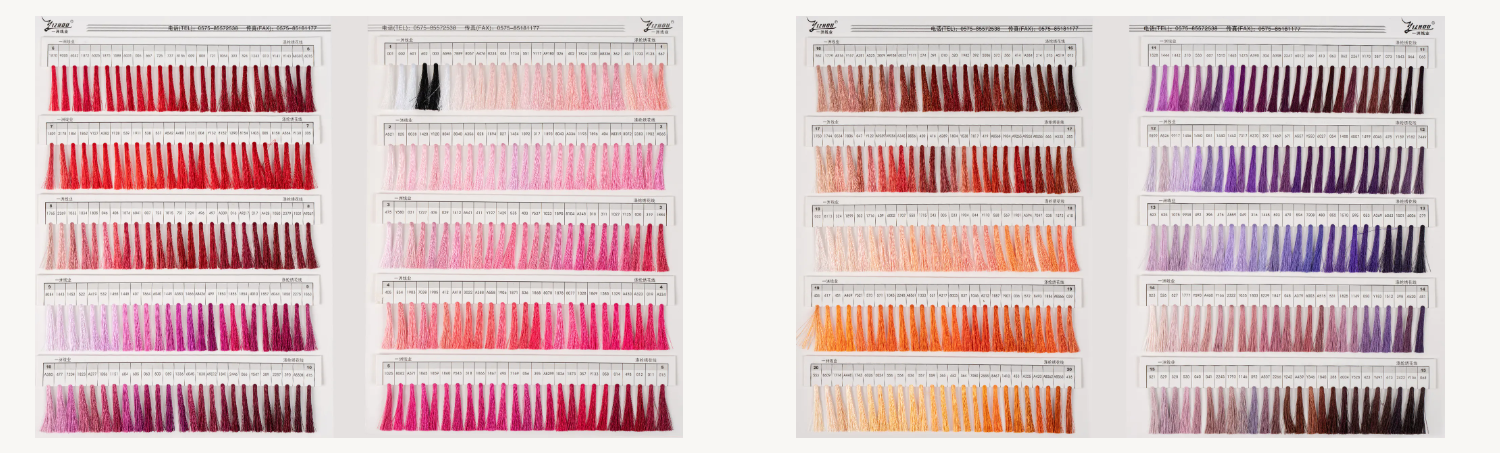
Navigating the Global Supply Chain: Identifying Key Polyester Embroidery Thread Manufacturer and Factory Partners
The global market for polyester embroidery thread is highly competitive, populated by both large multinational conglomerates and specialized regional manufacturers. For any company looking to secure a reliable, high volume supply of quality thread, selecting the right manufacturing partner is the most important strategic decision. This involves looking beyond simple price comparisons and scrutinizing the factory’s operational history, quality control processes, and logistical capabilities.
The Role of a Premier Polyester Embroidery Thread Manufacturer
A premier polyester embroidery thread manufacturer does more than simply twist fibers and apply color; they are a sophisticated textile operation that controls every step of the production process, from raw material procurement to final spooling and packaging. Their primary role is to ensure consistency. In embroidery, consistency is king: a slight variation in thread thickness, sheen, or tensile strength between dye lots can ruin a large batch of finished goods, causing massive financial losses and reputational damage for the end user.
The best manufacturers invest heavily in state of the art equipment for twisting, dyeing, and winding. The dyeing process is particularly crucial, requiring complex chemistry and meticulous temperature control to achieve both the exact required color shade and the necessary bleach and wash fastness. Manufacturers must adhere to international color standards and often provide custom color matching services, an essential capability for global brands that demand absolute color fidelity across different product lines and manufacturing locations. Furthermore, a top tier polyester embroidery thread factory will employ advanced quality control systems, utilizing sophisticated instruments to test for thread break strength, abrasion resistance, and color migration before the product ever leaves the facility. This rigorous internal testing provides an assurance of quality that is vital for the procurement process.
A Case Study in Excellence: Shaoxing Yizhou Thread Company Limited
To illustrate the standards of a top polyester embroidery thread manufacturer, we can examine the profile of established industry players. Shaoxing Yizhou Thread Company Limited is China embroidery thread manufacturers and wholesale polyester embroidery yarns suppliers. This company exemplifies the integrated approach required to serve the modern global textile market. The enterprise specializes in the production and sale of all kinds of high quality threads and yarns, focusing their expertise to deliver specialized products to a demanding international clientele.
Shaoxing Yizhou Thread Company Limited is positioned not just as a producer, but as a comprehensive supplier. They manage the entire value chain, enabling them to offer competitive wholesale pricing and maintain tight control over product specifications. Their dedication to a specialized product category allows them to achieve deep expertise in the manufacturing processes essential for high performance embroidery threads. This level of specialization ensures that the final product is consistently engineered for high speed, commercial application, delivering the reliability that end users need to maintain efficient operations.
Geographical Advantage and Operational History
The location and history of a manufacturing partner are key indicators of their long term stability and logistical efficiency. The Shaoxing Yizhou Thread Company Limited factory is located in Keqiao District, Shaoxing City, Zhejiang Province, China. This location is highly strategic. Keqiao District is globally recognized as a massive hub for the Chinese textile industry, placing the factory at the center of a rich ecosystem of raw material suppliers, machinery specialists, and logistical networks. This centralized location grants the factory superior access to necessary inputs and allows them to benefit from the region’s deep pool of skilled textile labor.
The company’s geographical advantage is further underscored by its connectivity. The factory boasts an excellent geographical location and convenient transportation, being only fifteen kilometers away from Xiaoshan International Airport. This proximity to a major international shipping hub drastically simplifies export logistics, reducing transit times and shipping costs, which are savings that can ultimately be passed on to wholesale buyers globally.
Furthermore, the company’s operational history provides confidence in its stability and expertise. Since its establishment in nineteen ninety eight, the company has been specializing in the production of various kinds of high quality yarns. Over two decades of continuous operation and focus demonstrate a proven track record and deep institutional knowledge in textile production. This longevity in a highly competitive market is a strong indicator of management stability and consistent product quality. The long standing commitment to a core philosophy, as evidenced by the company’s insistence on the production concept of “Customer First, Product First,” highlights a business model built on integrity and a dedication to meeting customer needs. This holistic view of the manufacturer’s capabilities, from their location to their core philosophy, provides a robust foundation for a strong and reliable supply partnership.
Decoding Denier Counts: Selecting the Perfect Thread Thickness for Your Project
One of the most frequent technical questions faced by buyers of polyester embroidery thread involves understanding denier, which is the unit of measure used to describe the thread’s fineness or thickness. Denier refers to the weight in grams of nine thousand meters of a single filament. The denier count, combined with the ply number (the number of strands twisted together), dictates the thread’s final appearance, strength, and suitability for specific embroidery applications. For commercial work, three particular denier counts are dominant: one hundred twenty denier two ply, seventy five denier two ply, and one hundred fifty denier two ply. Knowing when and how to utilize each is essential for maximizing both aesthetic results and machine efficiency.
The Versatility of 120D/2 Polyester Embroidery Thread
The 120D/2 polyester embroidery thread specification is arguably the most common and versatile thread used across the entire embroidery industry. It represents a near perfect balance between fineness, strength, and coverage.
The abbreviation 120D/2 signifies a thread composed of two strands, each having a denier of one hundred twenty. When twisted together, this combination yields a thread that is robust enough to handle the stress of high speed industrial machines while still being fine enough to create crisp, detailed embroidery designs.
120D/2 polyester embroidery thread is the standard choice for most apparel, logo, and general textile applications. Its ideal uses include:
Standard Logo and Lettering: It provides excellent visibility and a smooth finish for corporate logos, school emblems, and average sized lettering on polo shirts, jackets, and caps.
Fill Stitch Density: It fills in solid areas effectively without requiring excessive stitch density, which can cause puckering or stiffening of the fabric. It offers good coverage and depth of color.
Machine Compatibility: Virtually all commercial embroidery machines are optimized for this thread weight, making it the most reliable choice for minimizing tension adjustments and thread breaks across a diverse machine fleet.
Because of its all round performance, a majority of a buyer’s inventory should be allocated to this thread type. It is the dependable, go to option that works well on most fabrics, including cotton, blends, and synthetics, and remains the industry standard for general purpose commercial embroidery.
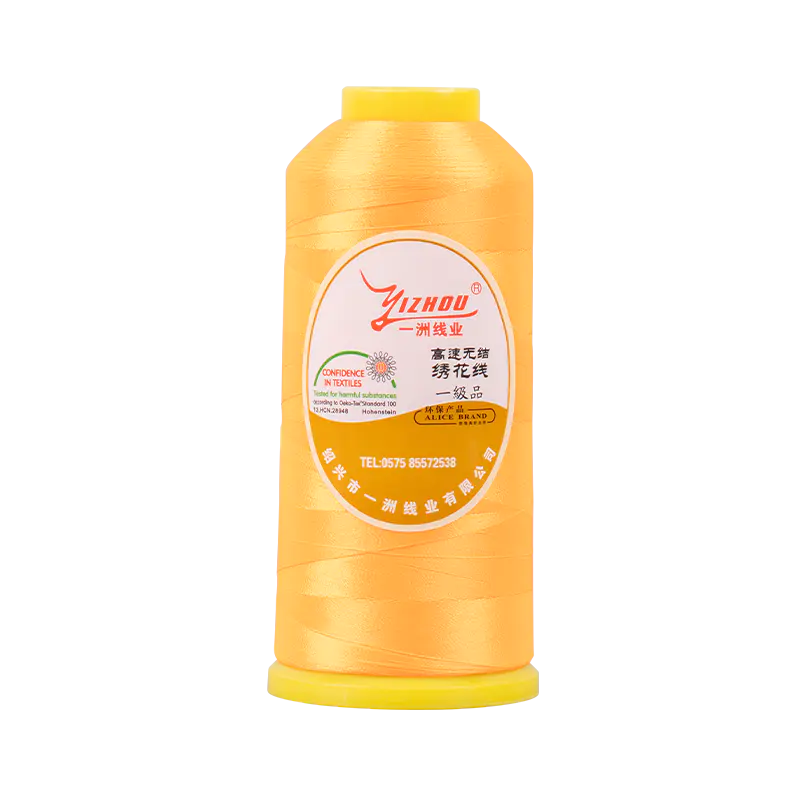
Precision and Detail: Utilizing 75D/2 Polyester Embroidery Thread
When a design requires intricate detail, extremely small lettering, or work on very lightweight or delicate fabrics, the standard one hundred twenty denier thread may prove too thick. This is the moment to select 75D/2 polyester embroidery thread.
The 75D/2 thread is significantly finer than the standard weight. Its use is specialized, focusing on maximizing design clarity in constrained spaces. The thread's reduced diameter allows more stitches to be placed within a small area without overcrowding the design or damaging the underlying fabric.
Key applications for 75D/2 polyester embroidery thread include:
Micro Lettering and Fine Lines: It is indispensable for stitching small text, such as legal disclaimers, product labels, or very thin outline details that would become muddled or obscured by a thicker thread.
Delicate Fabrics: On light garments like silk, sheer blouses, or very thin knitwear, the finer thread exerts less stress on the material, preventing the puckering and pulling that heavier threads can cause.
Realistic Detail: When creating detailed artwork, such as portraiture or complex shading where subtle transitions are required, the finer thread allows for more accurate color blending and smoother gradients.
While the finer thread may require a slightly higher stitch count to achieve adequate fill density compared to the standard one hundred twenty denier, the resulting level of detail and the improved finish on delicate materials justify its specialized use. Buyers must ensure that their machinery is properly tuned, as finer threads can be more sensitive to improper tension settings.
High Coverage and Heavy Duty: When to Choose 150D/2 Polyester Embroidery Thread
At the other end of the spectrum is the heavy duty option: 150D/2 polyester embroidery thread. This thread is thicker and stronger than the standard weights, making it the choice for demanding applications where maximum coverage and ruggedness are prioritized.
The 150D/2 specification provides excellent visibility and durability. It is designed to be highly resistant to abrasion and is often used in situations where the embroidered area will undergo significant physical stress.
The primary uses for 150D/2 polyester embroidery thread are found in heavy duty and utilitarian textiles:
High Abrasion Areas: Excellent for use on heavy canvas bags, backpacks, industrial workwear, safety vests, and footwear, where the stitching needs to endure constant rubbing and impact.
Maximum Coverage and Fill: Due to its thickness, it requires fewer stitches to fill a given area, making it a cost effective choice for very large, solid areas of embroidery where speed and coverage are more important than fine detail. It provides a bold, dimensional look.
Cap Embroidery: Often used for stitching on thick, structured caps and hats, where its added strength helps penetrate dense fabric layers without breaking and provides a prominent, dimensional appearance.
While the heavier thread offers superior durability and coverage, its use is less suited for intricate detail or very small fonts, as the stitches can easily overlap and lose definition. 150D/2 polyester embroidery thread is a powerful tool for commercial projects that demand ruggedness and a strong visual presence, completing the triumvirate of essential polyester thread specifications that every professional buyer must be familiar with.
The Buying Decision: Quality Control, Certification, and Future Trends in Thread Technology
For commercial buyers, the purchasing of polyester embroidery thread is a strategic procurement process. It requires establishing comprehensive quality control checks, understanding necessary international certifications, and staying ahead of emerging technological and sustainability trends. The goal is not merely to acquire thread, but to secure a consistent, high quality input that minimizes production risk and enhances the final value of the embroidered product.
Ensuring Product Quality: Certifications and Testing Standards
Reliance solely on a manufacturer’s internal quality assurances is insufficient in today’s demanding global market. Buyers must insist on international certifications that independently verify the safety and environmental compliance of the thread. Two of the most significant standards are essential for any reputable polyester embroidery thread factory:
Oeko Tex Standard One Hundred: This is a worldwide independent testing and certification system for raw, semi finished, and finished textile products at all processing levels. Certification ensures that the thread is free from harmful substances and is safe in human ecological terms. For products entering European, North American, or other regulated markets, Oeko Tex certification is often a mandatory requirement, providing a crucial assurance that the thread is non toxic and environmentally responsible.
ISO Nine Thousand One: While not specific to thread safety, the International Organization for Standardization’s Nine Thousand One standard certifies that the manufacturer operates a consistent Quality Management System. This speaks volumes about the factory’s commitment to internal processes, record keeping, and continuous improvement, which directly translates into consistency in the final thread product. A manufacturer with ISO Nine Thousand One certification is more likely to provide consistent dye lots and meet agreed upon technical specifications without variation.
In addition to documentation, savvy buyers conduct their own independent testing on received thread samples. This includes verifying the thread’s actual denier count, performing internal wash tests to confirm wash fastness and bleach resistance, and running samples at high speed on production machines to gauge performance and break rates under real world conditions. Only a robust program of certification validation and physical testing can fully mitigate the risk associated with bulk thread procurement.
Bulk Procurement Strategies for Polyester Embroidery Thread Buyers
Effective procurement of polyester embroidery thread requires strategic planning, especially for buyers dealing with high volumes and a wide array of colors. The core strategy is built around minimizing stockouts while maximizing economies of scale.
Volume Ordering and Dye Lot Management: Purchasing large volumes of thread, particularly in the most common specification like 120D/2 polyester embroidery thread, allows the buyer to secure a better per cone price. More importantly, bulk orders allow the manufacturer to produce the entire order within a single, consistent dye lot. Color matching across different dye lots is always a challenge, even with the best technology. By ordering enough thread from one dye lot to cover a season’s worth of production for a key color, the buyer eliminates the risk of noticeable color variation in the final garments. This is a crucial element for brand integrity and quality control.
Consignment and Just in Time Inventory: For long term partners, buyers may negotiate consignment stock agreements, where the thread manufacturer or supplier holds inventory locally, allowing the buyer to pull stock as needed and pay only upon use. This model minimizes the buyer’s storage costs and capital investment while ensuring immediate access to materials. Alternatively, a sophisticated just in time system, enabled by a geographically convenient supplier such as a polyester embroidery thread manufacturer located near a major shipping hub, allows for smaller, more frequent orders that keep inventory levels low but replenishment times short. This is only feasible with highly reliable and transparent supply chain partners.
The Future of Thread: Innovation in Recycled and Specialty Polyester Yarns
The future of polyester embroidery thread technology is being shaped by two primary forces: sustainability and specialized functionality. Buyers who understand these trends will be positioned for long term success and environmental compliance.
The Rise of Recycled Polyester: As global pressure mounts for sustainability, recycled polyester, or rPET, is becoming increasingly important. This thread is made from recycled plastic bottles or textile waste, offering the same physical properties as virgin polyester but with a significantly reduced environmental footprint. Premier polyester embroidery thread factory operations are rapidly adopting the production of recycled polyester threads, often securing certifications such as the Global Recycled Standard to validate their product’s claims. Buyers sourcing for major retail or ethical apparel brands are increasingly finding that the use of rPET thread is becoming a requirement, not merely a preference. Incorporating this sustainable option, whether in the popular 120D/2 polyester embroidery thread or the finer 75D/2 polyester embroidery thread, is a key strategic move for any modern purchasing department.
Specialty Finishes and Performance: Beyond standard thread, manufacturers are innovating with specialty finishes. This includes fire retardant polyester threads for safety and military applications, anti microbial threads for medical and athletic wear, and threads with enhanced conductivity for smart textiles. These specialized products, often built upon the strength of the 150D/2 polyester embroidery thread base for maximum ruggedness, allow apparel manufacturers to enter high value niche markets. A proactive buyer must continuously engage with their thread manufacturer to understand and test these technological advancements, ensuring their product offerings remain competitive and innovative in a rapidly evolving textile landscape. This dedication to staying informed is the final step in establishing a truly world class and future proof thread procurement strategy.